



 Ramroonline
 September 18, 2025
Kathmandu : When Lakpa Tenji Sherpa was a young boy in rural Ramechhap, he often watched toddlers—barely two or three years old—struggle along rough trails, attempting to reach the nearest school. The walk took at least half an hour. For such small children, it was nearly impossible.
“By the time they were able to go, they were already six or seven,” Sherpa recalls. “The age gap and the mismatch with the level of study meant many ended up leaving school. That was the turning point for me. I realized that if children were to learn, schools had to come to them. So the first thing I did was build one.”
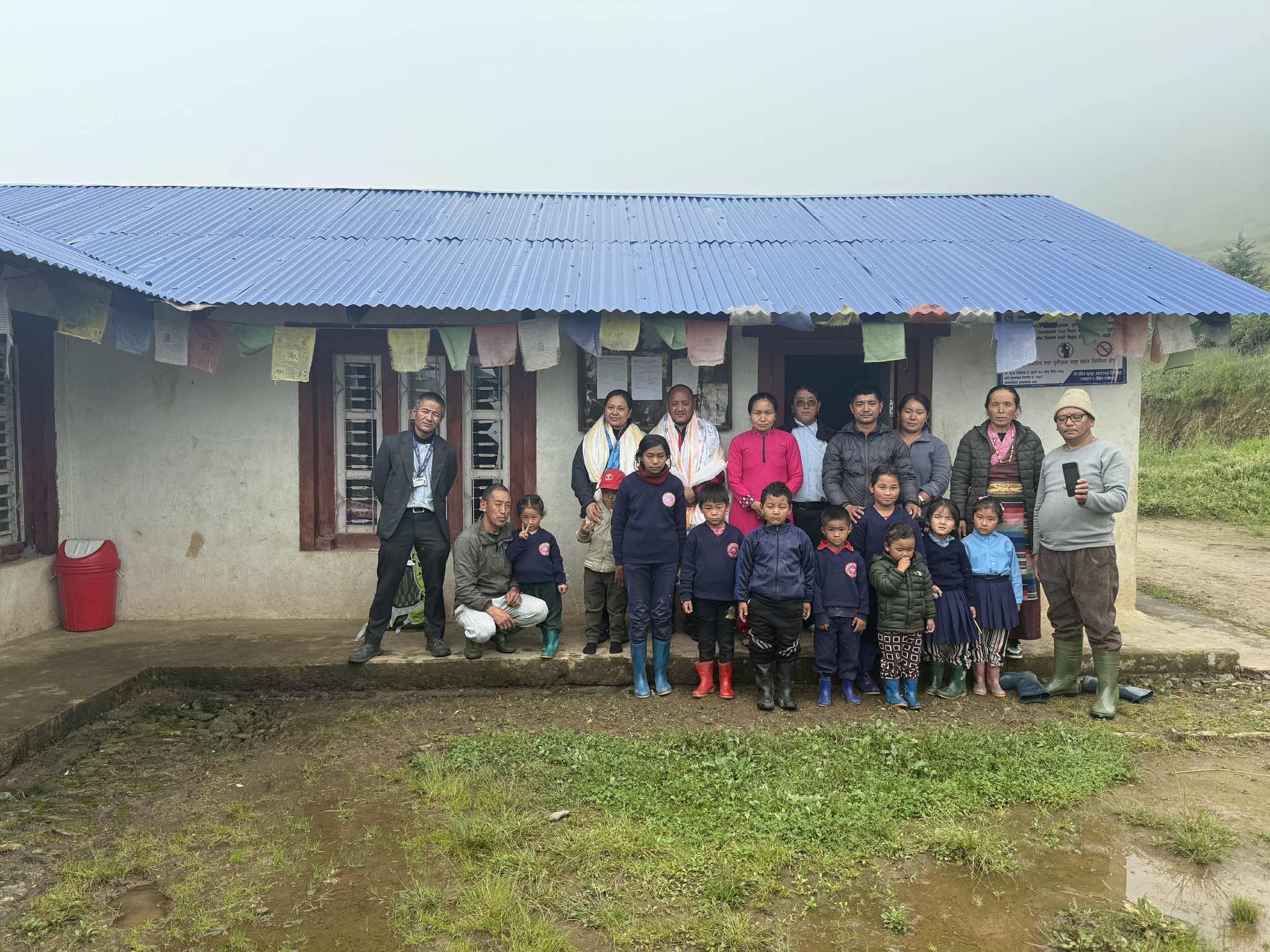
That single step, born from empathy for struggling children, grew into a lifetime of social service.
Service Beyond Wealth
Sherpa insists that service is not tied to money. “To say that social service is only possible with wealth is a kind of arrogance,” he says. “Service can be done with body, mind, and speech. The real requirement is willpower.”
Following that philosophy, he started in his own community: repairing collapsed classrooms, distributing school supplies, and supporting families who could not afford to send their children to school. For him, service was not charity but responsibility.

“True social service requires contribution, patience, and perseverance,” Sherpa explains. “It is something you do wholeheartedly and honestly, without expecting returns.”
Crossing Continents, Carrying the Mission
Although his birthplace is Nepal, Sherpa’s life path eventually led him abroad. In 2001, he moved to the United States. Yet his journey of service never stopped. Whether it was the 2015 earthquake or the COVID-19 pandemic, he remained deeply engaged in supporting those in need back home.

“At first, I wondered if I could still contribute after moving to America,” he says. “But then I found friends who shared the same passion for service. That gave me joy.”
Today, Sherpa is the General Secretary of the United Sherpa Association—widely known as Sherpa Kyudong. Based in New York, the non-profit has grown into a cultural, religious, and community hub for Himalayan immigrants.
Sherpa Kyudong: A Hub of Culture and Service
Established in 2008, the United Sherpa Association now counts over 10,000 members, including more than 4,600 active ones from 16 different communities. The organization is not only a cultural and religious center but also a fund that invests in education, culture, and humanitarian relief.
Since 2016, it has set up scholarships for underprivileged students, supporting four in pursuing higher education. It runs cultural language and music classes, as well as sports programs that have engaged more than 500 youths since the late 1990s.
The association has also taken on urgent humanitarian missions. It raised and distributed over $138,000 during the 2012 Everest tragedy and the 2015 earthquake. During COVID-19, it provided drinking water and PPE in New York, becoming a lifeline for students and immigrant families. Working with the New York City Council, it even set up Nepali- and Tibetan-language service centers for the city’s IDNYC program.
“This is not just a cultural center,” Sherpa says. “It is a place of trust, service, and identity—a hub for education, religion, relief, and community.”
Giving Back at Home
Despite his base in America, Sherpa has never forgotten his roots. After the 2015 earthquake, he provided direct financial aid to more than 100 families in his home district of Ramechhap—Rs. 50,000 to 70 households in Thathim and Rs. 40,000 to 40 families nearby.
He has also supported the construction of monasteries, schools, and even Hindu temples, reflecting what he calls the “spirit of inclusive service.”
“Social service is not about personal interest,” Sherpa stresses. “It is about positive social interest—something that brings satisfaction and dignity to everyone involved.”
The Bigger Picture
Sherpa is aware that Nepal’s social service sector is not without flaws. “Apart from some exceptions, the field has been riddled with distortions and irregularities,” he says. Even state bodies such as the Social Welfare Council, meant to regulate the sector, have been criticized. At times, religious conversion and other agendas have been carried out under the guise of social work. Weak government oversight has only fueled the problem.
That, he argues, is why true, selfless service is more important than ever.
“Social service requires sacrifice and dedication,” he says firmly. “Those who commit themselves sincerely and without self-interest are the ones who become true social workers. We must learn to honor and encourage such people.”
A Life of Persistence
From a trekking guide in Nepal to a community leader in New York, Sherpa’s story shows that service is not measured in rupees or dollars, but in humility, persistence, and heart.
“I will continue to serve as long as I live,” he says. “Because service, if done sincerely, is its own reward.”