



 Ramroonline
 September 8, 2025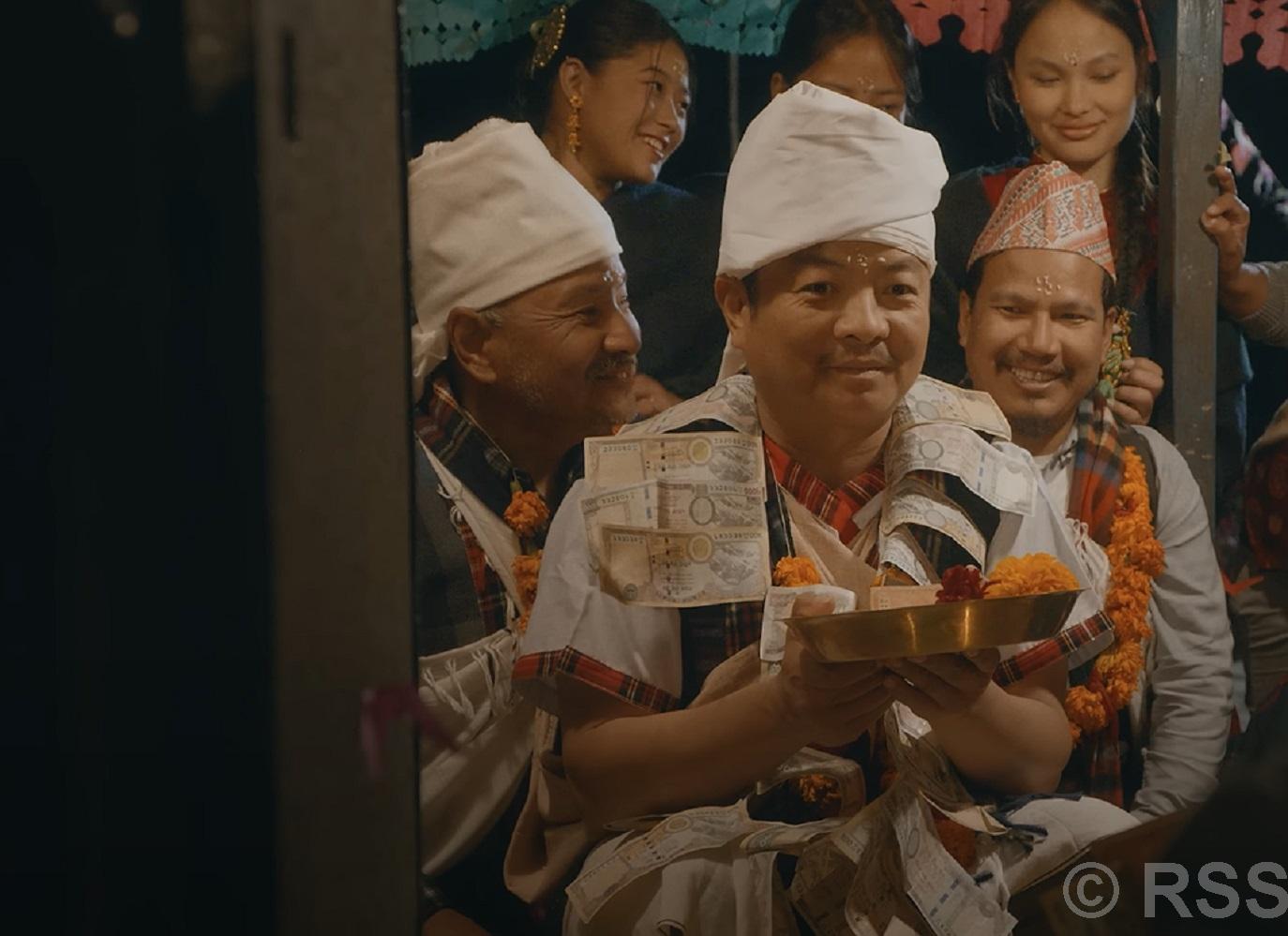
Kathmandu, Sept 8: Nepali cinema is increasingly turning its lens towards the country’s ethnic communities, with a new wave of films rooted in local traditions and stories. After Jari on Limbu culture, Gau Aayeko Bato on Rai culture, Ghar Jawain on Magar culture, and Karsang on Sherpa culture, the latest addition is Rimai, a film that draws deeply from the Gurung way of life.
Released nationwide on Thursday, Rimai captures the cultural practices of the Gurung community from birth to death, weaving them into a narrative of love, loss, and tradition. Director Khil Bahadur Gurung’s film focuses on Gurungs living in the highlands of Gorkha, presenting their customs not as background detail but as the heart of the story.
A Love Story Woven with Rituals
The film begins with a thread-tying ritual, symbolically betrothing Thagu (Dayahang Rai) to his cousin Rupa (Rishma Gurung). For Thagu, the childhood bond is binding; for Rupa, however, it is a source of resentment she cannot fully explain. As the years pass, Rupa grows closer to Govinda (Arpan Thapa), a trader, while Thagu, returning from work abroad, attempts to claim the love he has long believed was his.
The tension between personal choice and cultural obligation drives the plot forward. Gurung traditions are present throughout, from wedding ceremonies and the Phul Bandhne flower-tying ritual to funeral rites that underscore the indispensable role of daughters. The title Rimai, meaning “daughter-sister” in Gurung, encapsulates this cultural emphasis.
Culture as Cinema
Although Gurung-language films have long depicted these practices, Rimai distinguishes itself by presenting them in Nepali, opening the community’s culture to a broader audience. For actor Dayahang Rai, the project was both a professional challenge and a personal journey.
“I have had the privilege of playing characters from different communities across Nepal,” Rai said. “Through these roles, I’ve been able to understand the originality and beauty of our diversity. Rimai may appear simple, but it is rooted in authenticity.”
Rishma Gurung, who returns to cinema after nearly eight years, said she was drawn to the script’s cultural depth.
“This story carries the legacy of our ancestors. It highlights not only the importance of daughters but also the challenges they face within traditional structures. I believe it will resonate with both Gurung and non-Gurung audiences.”
Beyond the Gurung Community
The cast includes Gaumaya Gurung, Pushkar Gurung, Kabita Ale Magar, Maotse Gurung and others, many of whom found themselves encountering their culture in new ways through the project. Actor Pushkar Gurung admitted that, having grown up outside the Gurung-speaking world, the film became an education in his own heritage.
Editor Mitradev Gurung echoed the sentiment that Rimai is not only a cultural document but also a mainstream film.
“Any film must entertain to succeed, regardless of which community it portrays. We were mindful that Rimai, while grounded in Gurung rituals, should connect with all audiences.”
Towards a More Authentic Cinema
The release of Rimai comes at a time when Nepali films are increasingly embracing original stories rather than imitating foreign formulas. With attention to local dialects, music, and costumes, films like this are gradually reshaping how Nepali identity is represented on screen.
Already screening in Nepal and abroad, including in Australia and New Zealand, Rimai positions itself as both entertainment and ethnography—a portrait of Gurung life that aspires to inform as much as it entertains. For many viewers, it is an introduction to a culture often overlooked in mainstream cinema; for Gurung families, it may serve as a reminder of traditions at risk of fading.
As Nepali filmmakers look more closely at the country’s cultural mosaic, Rimai signals a growing confidence in telling stories that are at once local and universal.